
How much is this crisis going to affect you?
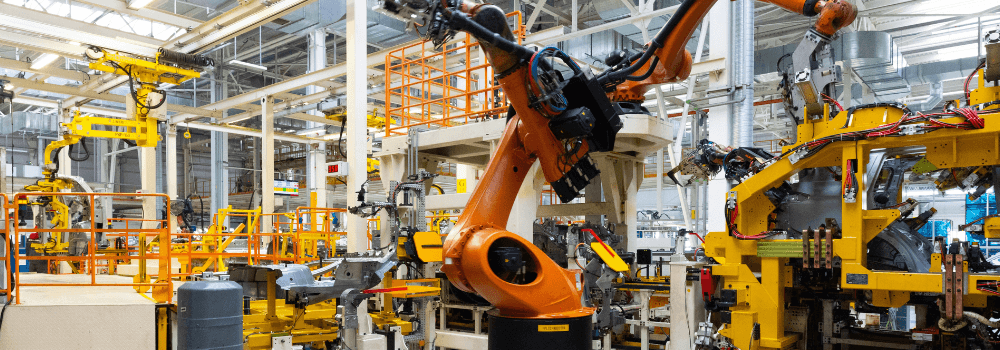
A robot being utilised during the supply process does not mean fewer engineers on the work floor. It usually means more, and more specialised ones.
The Robots Are Not the Story
The International Federation of Robotics recorded 542,000 industrial robots installed globally in 2024. Meaning there are now 4.664 million active units running on factory floors globally.
Situations like this always get a bad reputation, it is being portrayed as machinery and artificial intelligence (AI) taking jobs from ordinary people. We would argue that it is the opposite. The physical robots are just the new foundation of an ever-evolving industry, engineers are now being structured around these new pieces of machinery in order to work more efficiently.
Every robot on a production line needs an engineer to install it, program it to talk to other machinery, keep it safe, and fix it when it stops. Replacing a manual job doesn’t eliminate the need for people. It simply shifts that need toward programming and fault-finding, roles that are much harder to fill than the ones being automated.
Smart Manufacturing Is Now a Strategic Investment
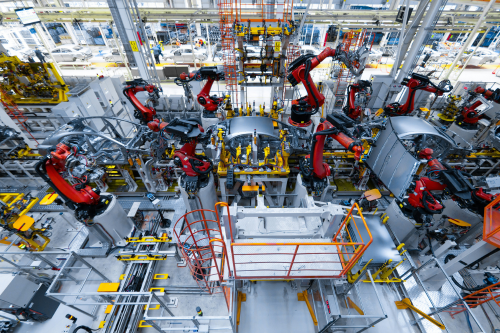
Deloitte's 2025 Smart Manufacturing and Operations Survey found that 92% of manufacturers see smart manufacturing as the main driver of competitiveness over the next three years. Modern manufacturing demands a completely different skill set. Success now depends entirely on having the skills to set up and understand these complex automated systems.
The same survey found manufacturers reporting average gains of 10 to 20% in production output and 7 to 20% in employee productivity after implementing smart manufacturing initiatives. Technology actually multiplies the impact of skilled engineering teams, as long as you have the right people to operate it.
Predictive Maintenance Needs Engineers
Predictive maintenance is one of the clearest examples of automation changing a role rather than deleting it. McKinsey reports that predictive maintenance typically reduces machine downtime by 30 to 50% and extends machine life by 20 to 40%. Achieving those numbers relies entirely on having someone who can actually read and understand the machine data.
Automated software can tell the user when a machine is behaving abnormally, but it cannot decide whether to shut it down immediately or let it run until the end of the shift. That judgment still belongs to a maintenance engineer. This ultimately, makes the role far more demanding than basic repair work because it requires data analysis alongside traditional mechanical skills.
Controls Engineers Are Becoming Systems Engineers
Controls and automation engineering used to be about programming a single, standalone machine. Today, the job looks very different. It is no longer just about the machine itself, but how it fits into the wider factory network. Engineers have to secure the equipment against cyber risks, which means finding ways to safely make it communicate with everything else on the production line.
Recent research from Deloitte also makes it clear that manufacturers are prioritising full network connectivity alongside traditional physical automation. Because of this shift, automation roles are moving away from isolated programming. Everything is heading toward cross-functional networks. Roles such as Mechatronics engineers, robotics maintenance technicians, and instrumentation specialists find themselves right in this situation. Unsurprisingly, these exact professionals are now some of the hardest talents for manufacturers to find.
The UK Numbers Are Showing Growth
The latest projections from Skills England point to a massive recruitment challenge. The UK's advanced manufacturing sector is already expected to grow by 47,000 priority positions by 2035. But the real pressure actually comes from retirement, where an additional 101,000 workers will be needed just to replace people leaving the industry. This pushes total demand toward 148,000 specialists. That target feels even further out of reach when you realise it doesn't even take new technology into consideration. Ultimately, any business that treats 2035 as a far-off deadline to fix their workforce is going to find themselves completely priced out of the talent market.
To make matters more challenging, 84% of those projected positions require Level 4 qualifications or above. This is mostly due to advanced manufacturing demanding high proficiency in numeracy and real-world problem-solving. Today, the job requires high-level digital literacy. Because the bar is so high, tracking people for controls or mechatronics positions is a massive challenge.
Retraining Is Faster Than Replacing
The best plan is to keep our current engineers and teach them digital skills. At the end of the day, a technician who already knows your machines and learns how to spot problems early brings far more value than a new hire who doesn't even know how the plant operates. The World Economic Forum predicts that nearly 40% of what workers know today will be outdated by 2030. Because of this, 85% of employers are focusing heavily on training their current teams. In fact, about half plan to move people into new, growing roles internally instead of always looking for outside hires. This is a massive wake-up call. Working in tech now means that learning and adapting have to be built right into our daily routines.
To put things into perspective, it helps to look at how much of the workforce is actually at risk. Back in 2017, the Office for National Statistics found that only 7.4% of jobs in England were at high risk of automation. They also pointed out that roles usually change rather than vanish entirely. That means manufacturing's real challenge isn't mass layoffs. Instead, it is helping a massive chunk of the current workforce adapt to their reshaped roles.
What This Means for Hiring
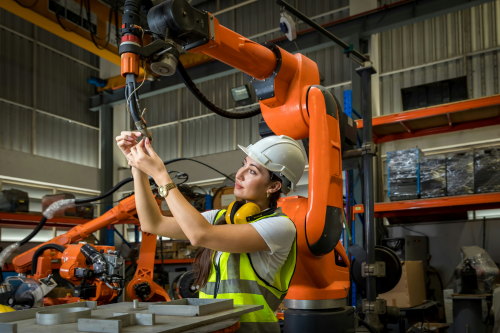
If you are recruiting for a manufacturing operation right now, the roles worth watching are the hybrid ones. Automation and controls engineers, condition-monitoring specialists, quality engineers who can validate machine-vision output, and supply-chain planners who can challenge an AI-generated forecast rather than just accept it, are all becoming harder to source than the generalist production roles they are partly replacing.
Structured retraining is often a much faster way to build these capabilities internally than fighting to hire a fully formed specialist from the outside market. The trick is finding the right people to guide that shift. You need to bring in leaders who understand both the physical process and the data layer, because they are the ones who will drive the transition and train the rest of your workforce.
Hiring for the Smart Factory
VHR is a specialist technical recruitment consultancy with a dedicated practice in Engineering & Manufacturing. We support organisations hiring across production, quality, and manufacturing engineering, from automation commissioning through to controls, maintenance, and technical leadership, on both permanent and contract bases.
We keep an active network of candidates in the disciplines where smart-factory hiring is currently hardest, including mechatronics specialists and condition-monitoring engineers. These are people who tend to already be deployed on live projects, so they are rarely visible on open job boards.
If your organisation has automation or controls roles that are not moving, a production line upgrade on the 12 to 18 month horizon, or a workforce plan that needs testing against current market supply, get in touch with VHR's Engineering & Manufacturing team.