


The 2026 edition of MRO Middle East, co-located with Aircraft Interiors Middle East (AIME), marked a defining moment for the global aviation aftermarket. Held on 4–5 February 2026 at the Dubai World Trade Centre, this year’s event was not only record-breaking in size but pivotal in shaping the direction of aviation maintenance, technology investment and workforce capability for the years ahead. With more than 300 exhibitors and approximately 9,000 attendees, the show underscored the Middle East’s role as a rapidly expanding aviation hub.
For organisations across the MRO supply chain – from OEMs to engineering talent specialists, MRO Middle East 2026 delivered clear signals about where the industry is heading, what challenges must be solved, and where the biggest opportunities lie.
Record-Breaking Growth Reflects a Booming Regional Market
This year’s show was officially opened by H.H. Sheikh Ahmed bin Saeed Al Maktoum, signalling the strategic importance of the aftermarket sector to the UAE’s long‑term aviation ambitions. The show expanded into an additional exhibition hall for the first time, reflecting unprecedented demand for hangar space, tooling, training and specialist capability as regional fleets grow.
Airline expansion across the Middle East is accelerating, with carriers placing record aircraft orders and adding denser flight schedules. This growth continues to fuel demand for both heavy and line maintenance capacity, making the region a magnet for global operators seeking strategic MRO partnerships.
Stand-Out Announcements That Will Shape the Future of MRO
Several major industry decisions were unveiled at MRO Middle East 2026, demonstrating a strong shift toward building in‑region MRO autonomy:
1. GMF AeroAsia Announced a New Middle East Facility
One of the most viewed announcements came from GMF AeroAsia, which confirmed the launch of a new regional facility designed to bring Heavy and Line Maintenance closer to operators across the Middle East. According to CEO Andi Fahrurrozi, this move directly responds to the region’s rapidly growing fleet support requirements and aims to deliver faster turnaround times and strengthen the local aviation ecosystem.
2. Expanding Infrastructure at Dubai World Central
A recurring theme across leadership panels was the scale of infrastructure investment underway across Dubai’s aviation landscape. Airbus, flydubai, and Emirates were all highlighted as expanding or relocating major facilities to Dubai World Central (DWC) by 2030. This development reflects how the region continues to position itself as the world’s leading maintenance gateway across Europe, Asia and Africa.
3. Avionics MRO Demand Surges
AMETEK MRO reported soaring demand for specialist avionics maintenance, driven by new digital aircraft platforms such as the A320neo and A350, complex flight‑deck technologies, and rising military fleet modernisation. The company emphasised that Middle Eastern environmental conditions—including high temperatures and dust exposure—are accelerating avionics component degradation, resulting in higher failure rates and greater need for specialist testing and repair.
This demand surge is pushing airlines and defence operators to build local avionics capability, reducing reliance on overseas overhaul centres and tightening regional supply chains.

The Hot Topic of 2026: AI, Robotics & Predictive Maintenance
While sustainability and supply chain resilience remained important conversations, the undisputed hot topic of MRO Middle East 2026 was advanced maintenance technology, particularly AI‑powered diagnostics, robotics, and predictive maintenance tools.
This trend was visible across the exhibition floor, where suppliers showcased:
- AI‑driven aircraft health monitoring
- Robotics for inspection and repair
- Automated ground support equipment
- Digital twins for maintenance forecasting
These innovations reflect the region’s drive to streamline maintenance cycles, increase accuracy in defect detection, and reduce operational downtime. Exhibitors continuously highlighted how AI and automation will be essential to supporting the region’s growing fleets and tightening labour markets.
Predictive maintenance is especially gaining traction, allowing operators to move away from scheduled maintenance intervals toward real-time, condition-based maintenance. This capability has become critical as aircraft utilisation increases and supply chains remain vulnerable to delays and parts shortages.

Supply Chain Pressures & Workforce Challenges Remain Key Concerns
Despite the excitement around growth and technology innovation, MRO Middle East 2026 also spotlighted the industry’s ongoing constraints—many of which present significant opportunities for engineering talent providers like VHR.
1. Persistent Shortage of Specialist Technicians
The Middle East continues to face intense competition for avionics technicians, systems engineers and software specialists. As new‑generation aircraft become more digitally integrated, the need for highly skilled, tech‑proficient engineers is rising faster than available talent pools.
2. Supply Chain Constraints for Critical Components
Global shortages of avionics units, displays, LRUs and structural components were widely discussed. Operators are increasingly adopting multi‑vendor sourcing and long‑range forecasting to mitigate delays. These issues are also accelerating regional investment in parts distribution hubs and manufacturer partnerships.
3. Rapid Fleet Growth Outpacing MRO Capacity
Regional airlines’ expansion plans are impressive, but the MRO capacity needed to support these fleets is struggling to keep pace. This is fuelling investment in new hangars, overhaul centres and training facilities across the Gulf.
Why the Region Is Facing Unprecedented Demand for Hangar Space, Tooling, Training & Specialist Capability
One of the clearest trends emerging from MRO Middle East 2026 is the extraordinary pressure being placed on the region’s MRO infrastructure. This isn’t simply routine industry growth; it’s the result of several converging forces that are reshaping capacity requirements across the Middle East.
1. Massive Fleet Expansion Is Outpacing Existing MRO Facilities
Airlines across the Middle East—particularly in the UAE and Saudi Arabia—are experiencing some of the fastest growth rates globally. Record aircraft orders and denser flight schedules mean aircraft are cycling through maintenance checks more frequently, requiring significantly more physical space and technical capability than existing infrastructure can support.
With Airbus, flydubai, and Emirates all expanding or planning to relocate major maintenance operations to Dubai World Central (DWC) by 2030, the region is rapidly scaling to meet fleet demand. These moves underscore the future need for more wide‑body hangars, dedicated line‑maintenance bays, and advanced repair shops.
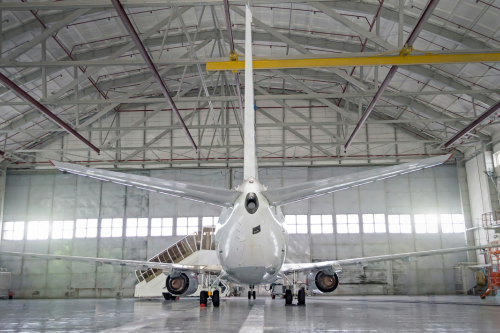
2. Advanced Aircraft Require Advanced Tooling & Diagnostic Systems
The rise of new‑generation aircraft, such as the A320neo and A350 families, has dramatically shifted the tooling requirements for MRO operations. These aircraft rely heavily on integrated digital flight decks, software‑driven systems, complex avionics and composite structures, all of which require modern diagnostic benches, precision tooling and specialist software environments.
AMETEK MRO noted that these next‑generation systems demand specialist technicians, engineering teams and diagnostic toolsets that go far beyond the traditional maintenance model.
This means the region needs significantly more:
- Avionics test benches
- Software‑integration tooling
- High‑tech calibration systems
- Composite material repair tooling
- Digital maintenance platforms
Without major investment in these areas, operators risk longer turnaround times and higher dependency on overseas repair centres.
3. Regional Environmental Conditions Increase Maintenance Frequency
Unlike cooler or more temperate climates, the Middle East’s extreme environmental conditions, heat, sand, dust and humidity, accelerate the deterioration of electronic and structural components. AMETEK MRO highlighted that these environmental impacts directly lead to higher component failure rates and more frequent maintenance cycles, increasing pressure on hangar availability and specialist repair capacity.
This regional reality means:
- More aircraft requiring unscheduled inspections
- Increased avionics and electronics repair intervals
- Greater need for rapid-response maintenance capability
- A higher baseline demand for hangars and parts inventory
4. Growing Localisation Efforts Are Driving In‑Region MRO Capability
As airlines and defence operators push for in‑region expertise, the Middle East is experiencing a wave of investment in new facilities and partnerships aimed at reducing reliance on international MRO centres.
These localisation efforts require:
- New facilities
- Expanded workshops
- Highly skilled engineers
- Intensive training and certification pipelines
Training needs in particular are surging, as operators require technicians proficient in digital systems, AI-enabled diagnostics, robotics operation and next‑gen avionics.
5. Technology Adoption Is Outrunning Workforce Capacity
Perhaps the most significant pressure point is the gap between technological advancement and available skilled labour. As robotics, AI‑powered diagnostics, and predictive maintenance tools become standard, airlines need engineers with hybrid skill sets spanning software, avionics, mechanical systems and data interpretation.
The Middle East is already experiencing intense competition for qualified avionics technicians, systems engineers and software specialists, creating demand not only for training programmes but also for more training facilities and modernised curricula.
This skills gap has a direct impact on:
- Turnaround times
- Maintenance quality and consistency
- MRO scalability
- Operator reliance on international expertise
6. Supply Chain Constraints Are Reinforcing the Need for More Capacity
At the same time, global supply chain disruptions continue to affect the availability of key components, especially avionics modules, displays and line‑replaceable units (LRUs).
Because parts availability is unpredictable, airlines need:
- Larger storage areas
- Faster access to stocked components
- Additional tooling to handle re-certification and testing
- Increased hangar time while awaiting parts
This amplifies the demand for physical infrastructure and trained personnel who can manage parts triage and high-volume repair cycles.
Why Demand Has Become “Unprecedented”
The Middle East is undergoing an aviation boom unlike any other global region. Growth in fleets, expansion of major carriers, introduction of complex aircraft technologies, environmental maintenance challenges, supply chain pressure and a tightening labour market are all converging at once.
The result is a perfect storm of demand for:
- More hangars to house expanding fleets
- More tooling to support next‑generation aircraft
- More training to upskill engineers rapidly
- More specialist capability to keep pace with digital and avionics complexity
And as MRO Middle East 2026 clearly demonstrated, this demand shows no sign of slowing

What This Means for Aviation Businesses & Talent Strategy
The 2026 event made one thing clear: the Middle East is not just a fast-growing market; it is reshaping the global MRO landscape.
For Operators & Lessors
Expect increasing availability of in‑region heavy maintenance, more competition among MRO providers and expanding digital capabilities. This will reduce turnaround times and strengthen reliability across fleets operating in or through the Gulf.
For MRO Providers & OEMs
Now is the time to invest in local partnerships, workforce pipelines and advanced technology adoption. Operators are actively prioritising providers with AI‑enhanced solutions, strong supply chain resilience and rapid-response repair capabilities.
For Engineering Talent Partners
With digital aircraft, AI‑enhanced maintenance and avionics growth dominating the agenda, demand for specialist engineers will continue to surge. Upskilling, global mobility solutions and targeted recruitment into niche technical roles will be essential to supporting the region’s ambitions.

MRO Middle East 2026 Signals a New Phase of Aviation Aftermarket Evolution
This year’s MRO Middle East was a clear reflection of the industry’s transformation. From major infrastructure announcements to surging avionics demand and the breakthrough adoption of AI across maintenance operations, the event showcased a region that is innovating fast and preparing for extraordinary fleet expansion.
For aviation businesses worldwide, the message is unmistakable: the Middle East has become one of the most strategically important regions for maintenance, repair and overhaul, and the momentum is only accelerating.
If your organisation needs support navigating this growth, scaling its engineering workforce or sourcing specialist aviation talent, VHR is ready to help.


